

Car Boot Liner Articles
Boot liner Basics
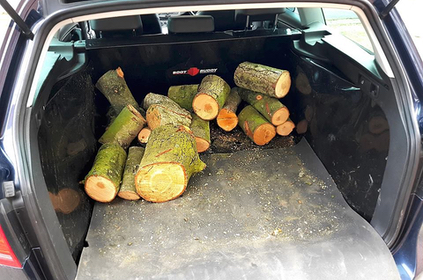
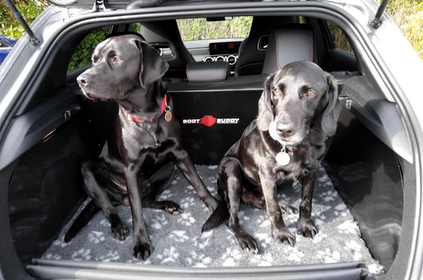
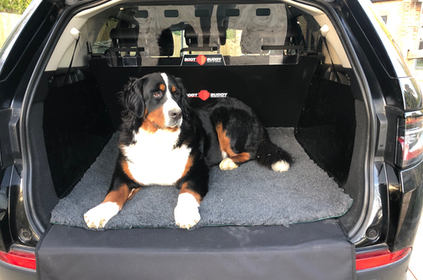
Car boot liners have been around for many years, and for good reason. Today we use our cars for so many different things; shopping, DIY materials, skip and tip visits, garden waste removal, transporting dogs and kids toys, bikes. Sports equipment, work tools, work samples, wheelchairs and scooters to name but a few. All of these can and will at some stage, cause damage to or make dirty your nice clean upholstery.
Boot liners in their many forms all aim to put a barrier between your boot interior, and whatever you need to transport. In the next section we will compare different types of boot liner, identifying their strengths and weaknesses, and giving some price comparisons. www.boot-buddy.com
Boot Liners Compared
Boot liners come in many different designs, sizes, materials, and fixing methods.
These range from a simple plastic sheet, either fitted or semi fitted, through moulded trays with both low and high sides and backs, to fully fitted hard wearing canvas or polyester material liners. [See the next section for materials and uses.]
Liners can be shaped to fit the individual vehicle, both low and high sided, or of a more 'box' style construction. Both have their uses. Moulded liners give a snug fit for each vehicle, and are more often than not low sided or just have a very small lip on three or more sides. Recently some or the larger car manufacturers such as Citroen, Mercedes, BMW, Peugeot, Honda have stopped making the high sided liners. Thus leaving owners of these car makes struggling to find the level of total protection they need. Try searching for "High sided Boot Liners" on Google or Yahoo, and see how few your options are. This seems to be a growing trend which is means more and more car owners are failing to find the level of boot protection they desire.
Also with many new cars being fitted with light coloured upholstery these days, a boot liner is no longer a useful accessory, no, now it has become a 'Must Have' item. We receive a large number of boot liner requests for cars that have not yet been delivered to their new owners. Obviously the priority here is to have full protection in place before the boot is used for any work, tools, carrying pet dogs etc.
Many liners are made from very tough, and often waterproof materials, individually shaped for specific cars. While these achieve the first goal of a boot liner, to place a barrier between the boot and it's contents, they do not achieve some other necessary goals. For example, when you have a good looking car, is it's image ruined by a crumpled and sagging canvas or soft material liner? Does the fixing method look ugly, and how effective are the fixtures when a large dog has been in it a few times, or when heavy tools or garden waste etc are forced into the boot space?
Warning: Many boot liners made from canvas type materials, or the soft sheet types, rely on Velcro to stick the high sides to the boot interior. However, before you buy any soft material liner, take along some hook (hard) Velcro, and test it on the plastic or carpeted sides or base. We have found that many vehicles now fit carpets and side and rear seat materials that Do Not Accept Velcro Fittings! For example. the following manufacturers have switched to these types of boot lining on some models; BMW, Mercedes, Saab, some Toyota, Peugeot, Audi, and others.
Another issue is that of ease of fitting and removal. How many cars now have compartments in the sides and base of the boot, for things such as spare tyre and tools, CD changers and the like? So ease of fitting, removal, good looks and functionality all need to be considered before purchasing a liner for your car. www.boot-buddy.com
Materials compared
In this section we will look at the various types of boot liner materials available.
1. Plastic sheeting. We all have probably tried simple plastic sheeting in times of need, perhaps for those skip or DIY trips. Have you found these measures to be innadequate? The plastic snags, and rips, allowing much of what you wanted to keep off the carpets to pour through. Also this type of protection is usually only good for a couple of trips and has to be thrown away with the rubbish.
2. Canvas or material liners. These are often treated on at least one side to be semi waterproof. These are usually much stronger that the pure plastic sheet option, and can be made to fit most vehicles. This option can indeed provide almost 100% protective coverage of the base, sides and backs of the rear seats.
Prices vary but expect to pay upwards of £54.00 for hatchbacks, more for estates and MPV's and 4X4's. Or you can opt for the bespoke quilted boot liners, prices in excess of £250.00.
Looks. While these soft material boot liners can be very fitted, if looks are high on your wish list carefully consider before choosing this option. Do a Google search for "boot liners" and carefully look at all of the photographs of these products, and then think, "Are these are the Best the manufacturers can make these to look." If their pictures show crumpled and ill fitting covers when new, what will they look like a few weeks or months down the road?
How about fixing these liners to your car boot? Are they secured by lots of fiddly strings, window suction caps, spring loaded bars, or the ever useful Velcro? See the Velcro warning in the Boot Liners Compared section above.
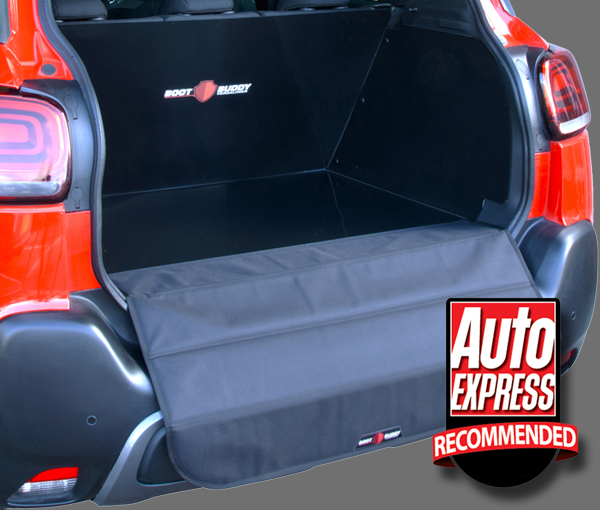
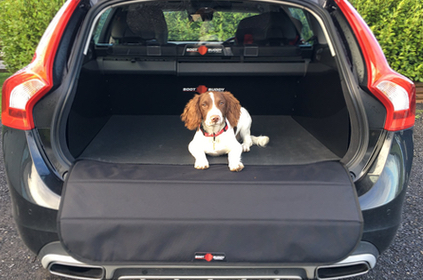
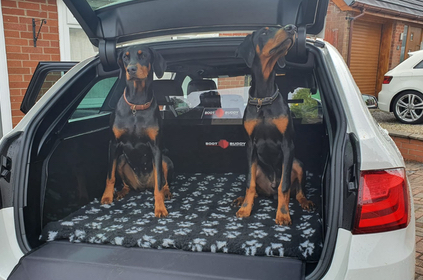
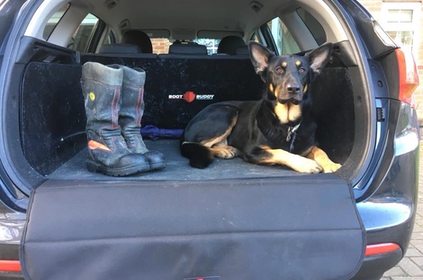
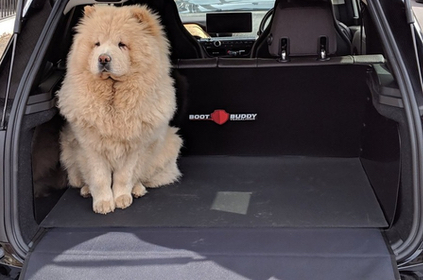
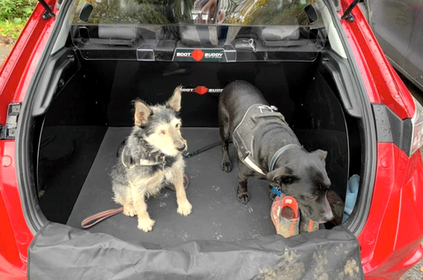
3. Plastic and fibreglass or moulded liners. These can provide much stronger liners due to the materials used. Also these need little or not fixings as they are either muolded to fit individual vehicles, or shaped to protect base, sides and seat backs. Most of these liners however are quite low in their height up both the sides and behind the rear seats, so may not provide all the coverage that you may need, for example when carrying dogs. Boot Buddy custom make high sided boot liners to offer all the benefits of maximum protection, without the need for fixtures and fittings in many cases.
Fitting and removal
Let's face it, no one likes fitting boot liners, or car seat covers, with all those instructions, fixings and contortions needed. We all want a simple life, and fitting boot liners are no different. Many of the boot liners we see, require several methods of fixing. These range from Velcro sewn on the outside of the material liners to affix to your carpetted boot, (that's if the carpeting actually accepts the Velcro, many do not.) To sewn in ties for holding the back and base in place. Never an easy option.
Then we see the basic plastic suction caps, stuck on windows to accept loops for the liner sides. N.B. Absolutely useless for dog owners, because as soon as a dog jumps in or out, or lies against the sides, these suction caps pop off leaving your dog wearing the boot liner like a blanket.
Some manufacturers expect buyers to use a spring tensioned bar to support the back panel, and while this is somewhat stronger, they often look awful, and can interfere with the pull out parcel shelf many cars now fit as standard.
Better still are the rigid and semi rigid liners that need no external fixings or support. These are often moulded to the individual vehicle. Some are little more than lipped mats or trays, but because they need no fixings, are very easy to fit and remove. Other makers offer higher sides and back panels, usually in the rubber or plastic moulded styles, and these simply squeeze up for fitting and removal. We recommend these if you must have 100% watertight ability.
So if ease and speed of fitting and removal are on your wish list, go for these last types. If however you need higher back and sides for maximum protection, with ease of fitting and cleaning check out www.boot-buddy.com
More Articles to be added as follows:
Cleaning
There are two basic methods of cleaning boot liners;
1. Remove them completely and put in your washing machine, for the cloth and canvas based materials. Or for the moulded liners, these can be lifted out and hosed down using a suitable brush, or pressure washed.
2. Cleaning without removing from your car. Until recently this was not a practical option. Most boot liners have a semi rough or paterned surface, so wet cleaning would take longer, with poorer results. With todays boot liner materials, often a damp cloth is all that is required, and the whole task can be completed in a couple of minutes. The advantages of a smooth liner can be seen by the following comment,
"As a Vet who has to transport a variety of animals in cages in the boot of the car, cleaning following transport of an infected animal can take hours. Cross contamination is a very real danger, so we need a boot liner that can quickly and easily be disinfected between different animals. Fixed or removable cages confine the animals securely, however we have found that these cannot contain saliva etc from soiling the carpeted interior. What we need is a solution that is both practical and economical."
Boot Buddy manufacture boot liners from a smooth semi gloss surface polypropylene plastic. This is the same grade as used in the catering industry, for work tops, chopping boards, and food preparation areas etc. The benefits of this material are as follows:
a) The surface is non absorbent, and can be wiped clean with water and or proprietry anti bacterial cleaning solution in minutes, and in while remaining in the car or van.
b) Polypropylene does not absorb odours, such as fish, onions etc (hence it's use in food preparation). Likewise smell and germs from animals such as dogs lying against this material can be quickly wiped away, leaving a fresh hygenic boot interior.
c) Agencies responsible for transporting sick or contaminated animals e.g. RSPCA, PDSA, dog breeders, kennels and catteries, Vetinery practices, council dog wardens etc, can ensure no cross contamination between animals.This can be achieved by a wipe down with a suitable cleaning agent, without having to remove the boot liner, thereby saving time and money following the carrying of a known or suspected infected animal.
Coverage
If you are looking for low trays or matting the choice is huge. Most car manufacturers supply their own fitted mats, or look on Ebay or Google for example for alternative mats.
Manufacturers in many cases supply a moulded low sides tray, well fitted, and watertight, but in most cases the sides are quite low, 10 to 15 cms being about the norm.
Maximum protection boot liners consist of several types and materials.
1. We are seeing a large number of soft material fitted liners on sale. These are mainly of the waterproof canvas or polyester woven fabrics, often with a PVC backing.
These liners are sewn and made for specific makes and models of car. They do provide protection over the maximum area of your boot, including the sides, base and seat backs. These types fulfil the primary goal of a boot liner in that they put a tough, often waterproof barrier between your boot and anything placed in the boot.
Strength
There are three basic types of car boot liner:
1. Moulded in hard plastic or fibre glass.
2. Canvas type materials either PVC or waterproof backed.
3. Semi rigid plastic.
Advantages and disadvantages of each type.
1. Advantages. Moulded or hard plastic liners offer substantial protection against puncture, sharp objects, and many in tray form are water tight against spills of most common liquids. Usually shaped gor individual vehicles and will last for years.
Disadvantages are mainly due to quite low back and sides which is fine for protecting the base of your boot, and part way up the sides. Many manufacturers has for some unknown reason stopped making the high sided versions, thus limiting the protection they can offer to for example, Dog owners who need high sides and back protection. The bases are often ribbed to try and offer some extra grip, but due to the rigid plastic surface extra matting is still required.
2. Advantages. Canvas type liners. These come in numerous forms, very often tailor made to individual vehicles, so they offer maximum coverage of base sides and backs of rear seats. They state their waterproof qualities, and achieve this by a pvc or similar backing bonded to the underside of the canvas, or polyester type hard wearing face materials. These are often fitted for shape, (much like car seat covers, which they also make from the same materials).
Disadvantages. Prone to puncture or gagging when sharp objects are carried, which may end their waterproof claims. The materials are relatively tough for most uses, but they cannot prevent damage to your car boot lining if a sharp object is dropped on them. So damage can occur through such material liners even if the liner itself does not appear to be damages.
3. Semi rigid Plastic liners. Advantages. These liners are as tough as the moulded liners, and although made from a semi rigid plastic, are stronger on direct impact as they will flex without shattering or fracturing. They can be fitted easily to most car boots because they will roll up to fit when some moulded liners will not. e.g. where dog guards and sat nav or cd changers are fitted.
These liners are self supporting so do away with the needs of many material liners which rely on external Velcro or other fixings. Plus sides and backs of seats can be fully protected where needed. If looking good is important, a semi rigid boot liner will look good from day one, and for many years.
Disadvantages. As these are usually three sides and have a flat base at the tailgate end for loading, they are not watertight like the four sided mouldes trays. The materials being plastic need the addition of an anti slip or rubber mat in the base, much the same as the moulded and material liners.
Durability
Practical Uses
Bumper Protection
Split Rear Seats
Folded Rear Seats
Full Load Space Protection
Fitting with Dog Guards
Mats/Matting
Trays
High Sided Liners
Measuring Your Boot
Copyright 2007 Boot Buddy Ltd